Custom Search

Wednesday, May 1, 2013

Top 10 Military Operation in the history

War has been a major part of history. Independence has been won and lost through battle; revolutions subdued; different groups and denominations crushed. However, during these large-scale battles, several small operations are performed to help pile up victories for each respective side. Operations are held by police forces outside of warfare, as well (DEA, FBI, etc.). Each operation has a name to go along with it. Some of these names are quite interesting. This is a top ten list of the greatest military operation names of all time. Here we go.
10.Operation Magic Carpet
In June 1945, the United States of America launched Operation Magic Carpet to return over eight million Americans back to their homeland, and out of Pacific and European theaters that saw war. The name of the operation is rather simplistic, but it speaks volumes about the glory of leaving a devastated region of the world for your homeland, and how peaceful the idea can be. The men were being transported on a “magic carpet” back to their safe-haven of America, and this is truly an interesting operation name. A European variation of Operation Magic Carpet was launched in 1946 to rescue European soldiers in foreign lands.
9.Operation Desert Storm
Taking place in 1991, Operation Desert Storm was the operative name for the Persian Gulf War. While the name may not be the most interesting of them all, it is quite intriguing. The title shows what the United States planned on doing in Iraq: unleashing a desert storm. Bombs, ammunition, and artillery would be deployed, and the sand in the deserts would create a massive storm as a result. That’s at least what I surmise from it. While I am fascinated with this operation name, there are a few others that I find to have a much better title.
8.Operation Bayonet Lightning
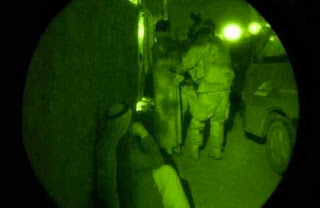
Lasting for only sixteen hours in December 2003, this operation was performed to seize any weapons or materials in certain villages in Iraq that could pose a threat to coalition forces during the War on Terrorism. This is one of those military operations that has quite an interesting title. I honestly could not imagine what this has to do with the actual actions the soldiers had to perform; the only idea I could conjure is if they were seizing these harmful weapons so quickly, it was like lightning. In warfare, operations have to be performed somewhat effectively. Putting “lightning” in the title may lead to some inspiration for the soldiers involved. Overall, this is one of the better operation names, and also one of the most recent. Kudos for a great choice of words.
7.Operation Valiant Guardian
This may seem a little ridiculous, but this is yet again, another operation pulled from a conflict involving the United States, coalition forces, and Iraq. This operation was launched to uncover insurgents and weaponry to ensure the safety of soldiers fighting in Iraq. The idea of the people involved in this operation being known as “valiant guardians” gives insight into the purpose of the plan: to simply protect our troops. However, by using the term “valiant,” this also shows the true power of the forces that the Iraqi forces are fighting against; the battle that they are embroiled in will not be an easy one to win when your opponents believe they have a grand level of valiance. I digress. All in all, this operation name definitely ranks as one of the best in history.
6.Operation Urgent Fury


In 1983, the United States, supported by other Caribbean island nations, invaded the island of Grenada because of a military coup that had occurred in the country. This invasion was codenamed Operation Urgent Fury. Plain and simple, fast and furious aggression was needed to subdue the revolution in Grenada, and that is exactly what the United States did. It is tough to explain why this operation name caught my eye, but then again, it is a very interesting title. The “fury” portion of this name is what really intrigued me. Urgency is a given in any invasion, but fury is a totally different monster in itself. Fury is dangerous on all levels. When someone is furious, you know their anger/rage is at a near-maximum level. Anyway, Operation Urgent Fury definitely ranks as one of the best operation names of alltime. Don’t like it? Well, it’s not anything to get furious about.
5.Operation Eagle Claw
Leave it to Jimmy Carter to order an operation that would fail miserably. Operation Eagle Claw was performed to try and rescue the Americans that were being held amidst the Iran Hostage Crisis. Eight helicopters were sent out, and none of them returned. One crashed into the helicopter carrying fuel and supplies for the other six, and once that was downed, the remaining ones were left helpless in the air. Sure, Operation Eagle Claw was a failure. However, its title is one of the greatest of all time. The Americans, whose symbol is the eagle, were going to use their “claw” (helicopters) to rescue the innocent hostages. A very American name for an operation, yes, but that does not take away from its amazing quality. The only aspect that could have changed its position on the list? Perhaps, if it was actually a success… but it all worked out for the best anyway, so I think it is fine at number five.
4.Operation Crescent Wind
What better way to follow-up a miserable failure, then with a success. In October and November of 2001, almost immediately after the terrorist attacks on 9/11, British and American air forces led strikes in Afghanistan attempting to weaken the Taliban. This led the way for further ground campaigns that continually weakened the government and Taliban as well. The name of this operation? Operation Crescent Wind. The title of this operation is pretty incredible. The wind is created by the bombing from the skies; and the crescent not only applies to the crescent moon, a symbol of Islam, but also the fact that the area that Afghanistan is situated in was once referred to as the Fertile Crescent. A heap of historical references in one simple operation name. Stunning, is it not? Anyway, I am definitely a major fan of this operation title. A great way to kick-off a war that still continues to this day.
3.Operation Spartan Scorpion


The “War on Terrorism” must be a topic that you are sick of by this point on the list, but there have been some pretty interesting titles from this time period. Operation Spartan Scorpion was launched in June 2003 to help clear the Iraqi countryside of remaining non-compliant forces and paramilitary groups that wanted to harm coalition forces. This title is a dynamic duo of harrowing power. A Spartan, in itself, is a terrifying creature. These ancient Greek soldiers were well-known for their propensity for fighting to the death, and a scorpion is an animal that can kill various other creatures in numerous ways. Essentially, this title was assigned to the operation to show that the forces fighting would be merciless in conducting their warfare. Two prolific death-bringers put into one operation name is sure to strike fear into the opponent. If I was fighting against an operation titled “Spartan Scorpion,” I would feel one thing coursing through my veins: terror.
2.Operation Overlord
Nearly ever history buff has heard of this one. June 6, 1944: the largest amphibious invasion of all time. 160,000 troops crossing the English Channel to try and take back German-occupied western Europe for the Allies. Most people know this event as D-Day, or the Battle of Normandy. The official title for this invasion was Operation Overlord. An overlord, by definition, is someone who has authority over another person or group. This operation was most likely given this title to show the Germans who was the more powerful side during World War II. The French, who were a part of the Allies, were the rightful overlords of the land of Normandy and its surrounding areas, and were going to fight to take it back. This was truly a turning point in the war, and from here-on-out, the Allies really did appear to be overlords in almost every battle. Less than one year later, in April 1945, the Germans surrendered to the overlords, and this portion of the war had ended. “Overlord” is truly representative of how power and momentum was swung back in the Allies’ favor, and the war took on a different look from there-on-out.
1.Operation Rolling Thunder
Lasting from March 1965 until November 1968, Operation Rolling Thunder was a lengthy, aerial bombardment performed by the United States on North Vietnam. Sure, it was much like “Operation Eagle Claw,” in the aspect that it was a colossal failure, but unlike the aforementioned plan, its title was much more indicative of its murderous intentions. Essentially, Operation Rolling Thunder was initiated to emaciate the Northern Vietnamese land, and to try and force the Viet Cong out of its holes and hills that helped them elude being caught. The idea of rolling thunder is terrifying, especially when the “thunder” portion of the term is a seemingly-endless bombardment that lasted for years. The operation was named as such because the bombs would just keep “rolling” and never stop. This gave a quality to the operation that made it seem as if it was perpetual. Again, while the bombardment was a failure, and did not accomplish its goals, the North Vietnamese land was completely destroyed as a result. Over three years of constant bombing is quite a bit for a small territory to handle, and it must have truly seemed endless during the time. Congratulations to Operation Rolling Thunder: while it was one of the biggest failures in the overall mistake that was the Vietnam War, it also has the greatest name for any operation in all of history.

The women who searched for bin Laden

In Kathryn Bigelow’s movie “Zero Dark Thirty,” Jessica Chastain played Maya, a young CIA operative whose stubborn pursuit of Osama bin Laden played a major role in the al-Qaida leader’s death.
The film garnered both awards (including a Golden Globe for Chastain) and controversy—largely because of graphic scenes depicting the CIA’s use of torture on suspected terrorists. But an undisputed—and to some, surprising—revelation in the film was its disclosure of the key role a female CIA agent played in the search for bin Laden.
Now a new documentary goes further—making clear it wasn’t just one female CIA operative relentlessly searching for bin Laden, as Bigelow’s dramatization suggests, but rather a whole team of women who began sounding the alarm about the al-Qaida leader almost a decade before the 9/11 attacks made bin Laden a household name.
“Manhunt,” which premieres Wednesday on HBO, tries to tell what director Greg Barker describes as “the real story” behind the 20-year hunt for bin Laden. It includes interviews with several members of the so-called Sisterhood, as the team of female analysts assigned to track bin Laden came to be known within the CIA.
Many of those interviewed, including retired agents Nada Bakos, Cindy Storer and Barbara Sude, speak on camera for the first time about their role in the bin Laden pursuit. And all, in some ways, appear to have inspired the female heroine of “Zero Dark Thirty,” from their headstrong efforts to convince colleagues that bin Laden was a serious threat to their fight to be taken seriously by male colleagues amid job pressures that came to dominate their lives.
Storer began tracking bin Laden in the early 1990s—“when al-Qaida was denying its existence even to its friends,” she says in the film. With tears in her eyes, she recalls how she was criticized in a performance review for “spending too much time working on bin Laden.”
“They said we were obsessed crusaders, overly emotional,” Storer recalls. The difference between her and her male colleagues, she says, is “Men throw chairs, women cry.” Still, she admits, “We were borderline obsessed, but I thought it was for a good reason.”
She recalls how she and her colleagues passed around large containers of Tums as they watched increasingly disturbing videos that suspected members of bin Laden’s network posted online—cataloging details in what was becoming a large dossier on al-Qaida.
“It wasn’t the sexiest job,” Bakos said in an interview with Yahoo! News. But she said it was a position that showed how important women are to the CIA. As analysts, she said, “women have patience and perseverance.” She added: “They weren’t looking for the sexy payoff. This wasn't a job people were being promoted to. They were really looking at it as in the defense of our country.”
Only after bin Laden began to be more explicit in his threat to attack the United States was their intelligence taken seriously. But despite clues analysts had that “something big” was coming, they weren’t able to prevent the 9/11 attacks. And the film details the guilt that Storer and her colleagues felt in the aftermath, as they trudged forward in their search.
Bakos, a veteran CIA analyst sent to Iraq at the height of the war to track down al-Qaida leaders there, seems to be a major inspiration for the Maya character in “Zero Dark Thirty”—though she said in an interview she never talked to Bigelow or anyone else associated with the film.
As part of her duties, Bakos was required to go on raids in search of her target, Abu Musab Zarqawi, then the leader of al-Qaida. It was a role that made her uncomfortable, as she recounts in the film, leading viewers to believe she, like Maya, struggled with seeing the sometimes brutal results of intelligence-gathering in the field.
But the film does not take a moral position on the CIA's interrogation efforts—and Bakos says that’s one reason she decided to speak out about her history as part of the bin Laden hunt. The film, she said, keeps it “politically agnostic and lets the audience decide for themselves” about the CIA’s tactics.
Bakos praised “Zero Dark Thirty” for portraying the “moments of intensity” that came during the CIA’s search for bin Laden and described the film’s depiction of “bureaucratic frustrations” as accurate. But she said Bigelow’s film did not fully communicate the “nuances of intelligence” that she and other analysts on the al-Qaida trail dealt with—and continue to deal with today. And she said it failed to focus on how much of the search was conducted by a "whole team of people" working together under the intense pressure of preventing another terrorist attack.
Asked what she hopes viewers will take away from “Manhunt,” Bakos said she hopes people will gain a better understanding about national security and how the CIA works.
“Intelligence is only as good as the information gathered," Bakos said. "There’s no crystal ball. And there’s no 100 percent. ... You cannot, 100 percent of the time, prevent or predict everything that will happen.”

Amanda Knox Speaks


Amanda Knox, convicted of murdering her British roommate Meredith Kercher, has nightmares and traumatic memories of her four years in Italian courts and prison. But she has only warm memories of Kercher and says she would like to visit her grave one day.
Knox talked about Kercher as well as her legal ordeal in an exclusive interview with ABC's Diane Sawyer. Her recall of those years has moments of regret, anger and sadness. Also among her emotions are warm thoughts of Kercher and empathy for her family.
"I want them to know," Knox said, getting emotional, "their grief has my every respect, has the respect of my family, and we just don't want to... we don't want to invade their life and their grief."
"And I really want them to understand that my need for justice for myself is not in contradiction with theirs," she said.
Knox recalled her short time, a mere six weeks, with Kercher, who was also studying in Perugia.
"She talked about how she wanted to be a journalist like her dad. And she talked about her sister. And if that's all I can give them is this memory that I have of her to add to... all of theirs that they can carry with them when she's gone."
Knox paused at that point and added, "[I hope] that eventually I can have their permission to pay respects at her grave."
The Kercher family has made it clear they believe Knox is involved, but Knox's father, Curt, told Sawyer that he hopes the families can meet some day. "I would like to see them when they clearly, clearly understand that Amanda had nothing to do with the loss of their daughter."
The Kercher family has spoken only rarely in public about Meredith's death, but today her sister issued a statement saying they do not intend to read Knox's new memoir "Waiting to Be Heard."
"Meredith is the victim, and we are waiting to be heard," her sister Stephanie Kercher said.
Knox is still battling to convince the Italian judicial system -- and the world -- of her innocence. After nearly six years, Knox, with her freedom back on the line after a recent Supreme Court ruling ordering a new trial, is breaking her silence for the first time.
"I want the truth to come out. I want misunderstandings to be looked at. I would like to be re-considered as a person," Knox said.
In "Waiting to Be Heard," Knox writes about her conviction, life in prison, acquittal and how she has changed.
"I have been in an experience where I thought everything that I had hoped for in my life was taken away from me, and I had to redefine what mattered. And when I think about the purpose of what I wrote, I think about what I would tell my little sisters about how to live no matter what's stopping you," she said.
Knox's journey to study abroad in Perugia, Italy, in 2007 was care-free for only a six weeks before Kercher was murdered on Nov. 1.
Kercher had 47 wounds on her body, the deepest being a fatal slash to her throat. There were signs that Kercher, who was trained in karate, fought hard for her life.
"I was stunned by her death, completely bowled over because it was unfair. She was my friend, and I lost a friend," Knox said to Sawyer.
Now, nearly six years later, Knox concedes she is not the same person she was before the ordeal began, when she was 20. She thought her own personal hell was over when an Italian appeals court threw out her conviction and she came home to Seattle in 2011. But even before this latest ruling, the toll taken on her has been obvious.
"My family was expecting the old Amanda who was -- she makes goofy faces -- which was the old Amanda back. And I'm not quite as chirpy anymore."

Amanda Knox Denies Doing Jailhouse Cartwheel

Knox now is more guarded, less outgoing. She is studying creative writing at the University of Washington, but in her first days back in Seattle she has struggled to break some of her prison routines, like washing her laundry each night in a bucket. She tells her sisters some of the tricks she learned in prison: using rubber bands to shave her legs.
It was a world she was unprepared for in the days after the murder as police, the prosecutor and the press zeroed in on Knox and her then boyfriend, Raffaele Sollecito. The young couple was unaware that their every moved was watched and every phone call bugged. In the days after the murder, a famous video of Knox and Sollecito kissing outside the crime scene rocketed around the world.
Looking back, Knox explains, "It never occurred to me that I would ever be considered a suspect. Ever."
All eyes were on the young couple of just seven days. Knox's odd behavior and lack of visible grief would come back to haunt her. Investigators and press drew attention to all of her actions, like allegedly doing a cartwheel at the police station while waiting to be questioned.
"I never did a cartwheel. I did do a split," Knox admits, adding that she was stretching after sitting for hours when a police officer commented on her flexibility.
Her behavior went beyond doing a split. Knox sat in Sollecito's lap. They kissed, made faces at each other and she stuck her tongue out at him. She said she wanted to write a song about this and wrote she would kill for a pizza. The police reprimanded them and asked them to stop.
Kercher's British friends cast doubt on Knox's innocence, testifying that Knox had shown little remorse at the police station, lacked grief and was sitting on Sollecito's lap, playfully making faces while in the waiting area.
But Knox's own words proved most damning.
In the hours and days after the murder, Knox and Sollecito told police the same story of their whereabouts the night of Kercher's murder -- they had spent the night at Sollecito's apartment.
But on her fourth day of questioning by police, during an overnight interrogation, Knox's story changed. She said she was in the house that night, in the kitchen covering her ears as Kercher screamed, and that her boss, Patrick Lumumba had killed Meredith.
Lumumba, a bar owner for whom Knox worked, had sent her a text message the night Kercher was murdered telling her not to come to work. It was a holiday weekend and business was slow.
She texted Lumumba back, "See you later." Knox says police insisted the text was proof she had met up with Lumumba that night.
"When they pushed me about [Lumumba's] message, and told me to think, to remember that I had met him, I can only describe it as breaking down. I didn't know what I remember anymore. I was wracking my brain for an answer to what happened."
Knox insists police yelled at her, threatened her with 30 years in prison, cuffed the back of her head, and told her she had amnesia.
An emotional Knox recalls, "I was demolished in that interrogation."
Sollecito was interrogated in another room. He also cracked and told police Knox may have left his apartment the night of the murder.
Within hours, Knox, Sollecito and Lumumba were arrested and taken to prison. But just two weeks later, Lumumba was released because he had an airtight alibi.
ABC News contacted experts around the country who state it is documented that coerced and false confessions happen frequently, but less frequent is naming an innocent bystander.
Justin Brooks, director of the California Innocence Project, points out the danger of people being interrogated without a lawyer present is that "sometimes we end up getting false statements and false confessions."
"Innocent people do often confess to crimes they haven't done," he adds. According to the Innocence Project website, "in about 25 percent of DNA exoneration cases, innocent defendants made incriminating statements, delivered outright confessions or pled guilty."
Famed defense lawyer Alan Dershowitz agrees people do sometimes falsely confess, but "what I rarely found in my experience is innocent people pointing the finger at another innocent person, saying I didn't do it, but I was there, he did it. That's very rare, for an innocent person."
Patrick Lumumba was not there. He says because of Amanda Knox his two weeks in jail ruined his reputation and his life.
Knox is still angry that her crucial interrogation was not recorded. She says it is the only time she was questioned by police that where no recording exists. The prosecutor, Giulino Mignini, says they didn't tape her interrogation to save money, despite the fact they were bugging her and Sollecito's phone calls and conversations in waiting rooms.

Amanda Knox's Life in Prison

"And the only thing that is left is the police's word verses mine, and a couple of documents I signed when I had no lawyer present. This is what I'm up against," Knox laments.
As Knox sat in a grey, concrete prison cell, prosecutors declared that the murder was a drug-fueled sex game gone wrong. Knox, they said, was the ringleader.
The prosecution claimed they had a knife, the alleged murder weapon, with Kercher's DNA on the blade and Knox's on the handle.
They said that Kercher's bra clasp, which had been cut from the rest of the bra, had Sollecito's DNA on one prong.But police found no DNA whatsoever of Knox in Kercher's bedroom where she was killed.
While the lawyers battled over a minute scrap of what they claimed was Sollecito's DNA, there was a great deal of DNA at the murder scene that matched a local man, Rudy Guede. Guede's shoe print and hand prints were found in the victim's blood. His DNA was also on her removed clothing and her purse, which was missing credit cards and 300 euros. It was also found inside Kercher's body.
Guede had a history of drug abuse and theft. He robbed a nursery school, law office and home, at times threatening people with a knife.
Police arrested Guede, who had fled to Germany. In a secretly recorded Skype phone call with a friend before his arrest, Guede said he was at Kercher's house the night she was murdered, but that he had been in the bathroom on the toilet when Kercher was killed by an intruder.
Guede also said Knox was not at the house that night, but when asked whether Sollecito -- "the one from TV" news -- might have been there, Guede says, "I think so, but I'm not sure," according to Knox's memoir.
Knox and Sollecito stayed in prison, and the press ran with their headlines calling Knox the "angel faced killer." The case became an international media frenzy, and the eccentric girl from Seattle was in the center of it all.
In 2009, Knox and Sollecito's trial began in a medieval courtroom, the press packed inside, fighting for the perfect shot of the "American Temptress," as one headline read.
In the courtroom, Lumumba's attorney called her "a devil."
"It's one thing to be called certain things in the media, and then it's another things to be sitting in a courtroom, fighting for your life while people are calling you a devil," Knox said.
As Knox sat through her year-long trial, she listened to Mignini present a series of motives, and in the end, during his closing arguments, Mignini said there was no motive at all.
Knox was stunned when the court found her guilty of murder and sentenced her to 26 years in prison.It is a moment Knox will never forget, "I was carried out of the courtroom by the armpits, moaning that it was impossible. I just -- complete and utter disbelief."
As she remembers hearing her mother and sister wail, Knox's voice cracks with emotion.
"For all intents and purposes, I was a murderer, whether I was or not. And I had to live with the idea that would be my life. I would be one of those people who suffered an incredible, mind-boggling injustice," she said.
After her conviction, Knox says she had to rethink her life.
"I felt assassinated as if I were being sealed in a tomb. And the tomb was my life, it wasn't prison."
She says she considered suicide.
In her book, Knox writes that she often wondered what would be the breaking point to drive her to kill herself. Possibly, she thought, if she lost her appeal and her sentence was increased to life in prison, that would be it.
She says there were many ways to kill oneself in prison, and she "imagined doing them all."

Amanda Knox's Appeal and Freedom

Knox spent four years in Capanne prison, outside only one hour a day. She passed time doing sit-ups, writing letters and playing the guitar.
She says her only view to the outside world was a small window looking at a cypress tree, and she could hear women wailing through their cells all day and night.
She says her first friend was a child named Nina, whose mother was a prisoner. But it was the prison chaplain, Don Saulo, whom she says helped her survive.
He taught her how to play the piano on a keyboard she drew on a piece of paper.
She says she spent 1,427 nights in prison for a crime she did not commit.
"I had to grow up in prison for something I did not do," she insists.
She says it was her family her who got her through. She calculated that she saw them one percent of the time, but "they were there 100 percent of the time."
"I felt incredibly guilty for what they were having to sacrifice for me," she said. Her father Curt Knox estimates the family spent more than $1.5 million on legal and travel fees.
Knox drew three columns in her journal ? each one a list of the things she would do with her life based on the three possible outcomes she faced: freedom, 26 years in prison or a life sentence.
Her "life-imprisonment list" included:
Stop writing letters home.Ask family to forget me?Suicide?
While awaiting the court's ruling on her appeal, Knox imagined her mother, Edda Mellas, going home to Seattle alone. Thinking of this worst case scenario -- her mother leaving Italy without her -- she wanted to find a way to comfort her.Knox wrote her mother a letter -- or maybe a goodbye note -- that would arrive after the appeal verdict.
On Oct. 3, 2011, Knox was acquitted of murder and freed immediately. She flew 6,000 miles home to Seattle the next day.Knox's final letter to her mother arrived in Seattle not long after she did.
The beginning reads, "I'm writing this letter in case you come home and I'm not there with you to receive it, just in case we didn't win and I won't be going home for a long time."

Tuesday, April 30, 2013

Gunmen assassinate election candidate in Pakistan,Terrorist Islamic suspected for the attack


A government official says gunmen have killed a politician running for a provincial assembly seat in southwestern Pakistan.
Saeed Ahmad says Abdul Fatah Magsi was gunned down on Tuesday in Jhal Magsi, about 350 kilometers (220 miles) southeast of Quetta, the capital of Baluchistan province.
Ahmad says the candidate's supporters fired back and killed two of the gunmen. He says the attack seemed to be the result of a political rivalry.
Ahmad says the election in the constituency has been postponed, which is mandatory whenever a candidate is killed. National and provincial assembly elections are scheduled to take place across the country on May 11.
Baluchistan is home to both Islamic militants and separatists who have been waging a bloody insurgency against the government for decades.

Obama to address Mexico drug war


US President Barack Obama should address human rights violations related to Mexico's Washington-backed war on drugs when he visits the country this week, Human Rights Watch (HRW) says.
Obama is slated to meet Mexican President Enrique Pena Nieto, who took office in December and inherited a drug war that had killed some 70,000 people in six years under his predecessor Felipe Calderon.
Pena Nieto has shown a willingness to modify Calderon's strategy of deploying 50,000 troops to crack down on powerful cartels, which are themselves engaged in vicious turf wars.
In a letter to Obama, HRW said the country's public security strategy pursued by Calderon during the so-called war on drugs failed to address the corruption of police forces and "virtually zero accountability" for those who commit crimes.
It also alleged that Mexican security forces, in addition to carrying out "wide-ranging arbitrary arrests," also committed torture, noting that complaints to Mexico's National Human Rights Commission had totalled more than 6500 during Calderon's reign.
In the letter, Human Rights Watch accused the US administration of consistently offering "uncritical support for Calderon's policies," urging it to publicly back a new approach.
"Unfortunately, while the Pena Nieto government has taken the first step of recognising the crisis at hand and the need to change strategies, your administration has been noticeably silent," said the letter signed by Jose Miguel Vivanco, executive director of the group's Americas division.
"This visit provides an ideal opportunity to break that silence by demonstrating the US government's concern for Mexico's human rights problems and its commitment to supporting a new approach."
In Mexico on Monday, Amnesty International and other organisations, meanwhile, delivered a petition with 20,000 signatures to the US embassy calling for stricter control of weapons entering the country along the common border with its neighbour to the north.
Obama heads to Mexico and Costa Rica on Thursday. He is due back in Washington at the weekend.

Japan and Russia want to end World War II

Russian President Vladimir Putin met in the Kremlin Monday with Japanese Prime Minister Shinzo Abe, the first top-level Russo-Japanese summit in almost a decade.The two wrestled for hours with the problem that has stymied Russian and Japanese leaders for almost 70 years: how to find a mutually acceptable and hopefully profitable way to finally end World War II.
"The leaders of both countries agreed that the situation where, 67 years after the conclusion of [World War II], we have still been unable to conclude a bilateral peace treaty, looks abnormal," said a joint statement at the meeting's end Monday.
"We have ordered our foreign ministries to intensify contacts with an aim to developing a mutually acceptable plan. This will prioritize two parallel processes: discussion of the main subjects of the peace agreement and, simultaneously, ways to actively promote improvements across the full range of Russian-Japanese relations," it said.
Many new circumstances are driving Moscow and Tokyo to take a fresh look at one another, despite the debate that has raged since the end of World War II about the rightful ownership of the Kuril Islands, which Russia has occupied since the end of the war but Japan still claims. The dispute is the major reason the two nations never signed a peace treaty. 
Still, since the nuclear disaster at Fukushima, Japan's reliance on Russian energy supplies, particularly liquified natural gas, has grown significantly.
As Russia's geopolitical focus pivots eastward, Moscow is also eager for outside investment and expertise to develop its vast, resource-rich but largely unpopulated Siberian and far eastern regions. Japan is a logical go-to place for the capital and technology that Russia needs.
Japan might also be keen to distract Russia from its burgeoning partnership with China, with which Tokyo has increasingly tense relations, and introduce a bit more balance in fast-changing Asia Pacific.
Mr. Abe brought with him a delegation of 120 Japanese business leaders, some of whom told journalists they are eager to see a "road map" prepared for intensive Russo-Japanese cooperation in resources, energy, infrastructure, and even hi-tech industries. In a brief statement following the talks, the Kremlin announced that the two leaders had signed a series of modest agreements aimed at promoting cultural interchange, strengthening inter-governmental cooperation, and improving financial arrangements for Russian infrastructure projects.
But there is one big obstacle that continues to stand in the way of any true breakthrough: the territorial dispute over the Kuril Islands. These four small specks of land off Japan's northern tip were occupied by Soviet forces in the waning days of World War II, and resolving their status looks as unsolvable as ever. Without a deal over them, no formal peace treaty seems even remotely possible.
"There is a mutual wish to find a solution to the Kuril issue," says Anatoly Koshkin, an expert with the official Institute of Oriental Studies in Moscow.
"Japan is really interested at this stage to inject some dynamism into its relations with Russia. It has complicated problems all around, including territorial disputes with China and South Korea, so a political breakthrough with Russia would be welcome," he says, adding that, "Japan is interested, especially since Fukushima, in Russian coal and energy supplies. Russia already provides 9 percent of Japan's gas, but this looks set to rise. In July Japan will have elections to the upper house of parliament, and it would be good for Abe if he could demonstrate a success in foreign policy."
"But with all that said, I really don't see any solution to the Kuril problem just now. I don't expect Russia to change its position" and agree to give the islands back to Japan, he says.
The four islands – Kunashir, Iturup, Shikotan, and Habomai – which Russia calls the "southern Kurils," and Japan refers to as its "northern territories," have been the subject of futile negotiations for decades. The outlines of a compromise have been apparent since 1956, when reformist Soviet leader Nikita Khrushchev offered to return the two southernmost islands, Shikotan and Habomai, and Japan agreed that its claim to the other two was "weak."
But the deal was never finalized, some say because the United States blocked it by warning Japan that this would create a legal precedent for the US to keep Okinawa.
Russia's official attitude has see-sawed ever since. Soviet leader Leonid Brezhnev's insisted in the 1970s that "there is no such territorial dispute" over the Kurils, even as the last Soviet president,Mikhail Gorbachev, admitted in 1990 that "the problem exists."
The pro-Western Russian leader Boris Yeltsin, in a typical flamboyant gesture, pledged to resolve the issue by the end of his second term in 2000. He never did.
Since then, especially under Russian President Dmitry Medvedev, the dispute has become seriously inflamed, with nationalists on both sides using it to stir up passions in the absence of any diplomatic dialogue whatsoever. As recently as last February, the Japanese armed forces scrambled fighter planes to intercept an alleged incursion by Russian jets into Japanese airspace near the Kurils.
But Putin intrigued many observers recently by saying the dispute could be settled with "hiki-wake," a judo term that means "a draw." Experts say that probably means the Kremlin is leaning toward the old 1956 formula, which would involve giving two of the islands back to Japan.
"This issue has been talked to death by experts. Literally dozens of different plans have been floated over the years," says Sergei Strokan, a foreign affairs columnist with the Moscow daily Kommersant.
"The problem has never been a shortage of ideas. It's always been about a lack of political will to deal with it. Experts discuss, leaders act.... But we would need to see some strong reasons for Russian leaders to move dramatically on this. Japan could show us how it might be instrumental in helping to develop Siberia and the far east of Russia," he adds.
"But right now all eyes in Moscow are focused on China. The Chinese lobby is very strong, and those who think Japan might be our best choice of partner are marginalized. Abe's visit was positive, and good for both countries, but it doesn't look like it was a game-changer." 

Italian war correspondent missing in Syria conflict

An Italian journalist has been missing in Syria for 20 days, his newspaper La Stampa says.

Domenico Quirico, 62, an experienced war reporter, entered Syria from Lebanon on 6 April saying he would be out of touch for a week.
La Stampa says there was sporadic phone contact until 9 April since when nothing has been heard.
The conflict in Syria has made it one of the most dangerous places for journalists to work in.
According to the Committee to Protect Journalists, Syria was the most deadly country for reporters in 2012.
Four Italian journalists were seized in Syria earlier this month but freed soon afterwards.
Crisis unitLa Stampa's editor-in-chief, Mario Calabresi, said the Turin-based paper decided to publicise Mr Quirico's disappearance after a search for the correspondent failed to turn up any leads.
"We had hoped that keeping quiet would help bring about a solution," said Mr Calabresi.
"Unfortunately this has not been the case, and for that reason we have decided to make his disappearance public."
The Italian foreign ministry has activated its crisis unit to try to trace Mr Quirico.
The journalist, who has reported on conflicts in Sudan, Uganda and Libya, would often disappear for a few days at a time, said Mr Calabresi, but not for this length of time.

Forest war over


FEDERAL Environment Minister Tony Burke has declared an end to Tasmania's forestry wars, after key environmental groups signed up to an amended agreement with the state's logging industry.
Tasmania's Lower House is expected to sit late tonight to debate the forestry peace deal legislation, which is designed to end decades of bitter wrangling.
Environmentalists and the timber industry were forced to recommit to the agreement after the state's Upper House made amendments that delayed the protection of more than half the forests originally earmarked.
With agreement reached between signatories including The Wilderness Society, the Australian Conservation Foundation, Environment Tasmania, and the Forest Industries Association of Tasmania, Mr Burke said the state's forestry war was now over.
Passing of the legislation will unlock tens of millions of dollars in federal and state assistance, aimed at helping Tasmanian struggling forestry industry restructure.
"Instead of an industry that was going through a significant decline ... as of tomorrow we get a story where conservation and forestry jobs get to move forward hand in hand," Mr Burke told reporters in Hobart this afternoon.
"In terms of wars, yes (it's over). You might get the odd skirmish from small minor groups. But what we have seen from the last 30 years ends tonight, and that is something to celebrate."
Despite her Tasmanian Greens colleagues and environmental groups backing the forestry agreement, Australian Greens Leader Christine Milne labelled the deal "dead" because of the Upper House amendments.
"Now there is a salvage strategy at best, a picking over the bones of the dead body," Senator Milne said.
"It died in the Upper House when the Legislative Council in Tasmania took a chainsaw to this agreement and destroyed its integrity."

Real Madrid vs. Borussia Dortmund


If Real Madrid are to progress to the final of the Champions League they'll have to overturn a 4-1 deficit from the first leg, though will have the home crowd behind them at the Santiago Bernabéu. After being shocked by a brilliant Borussia Dortmund last week, it'll be a tough ask.
Robert Lewandowski netted all four goals in an astonishingly good performance, which has given Dortmund a great chance of reaching their first Champions League final since 1997, when they saw off Juventus 3-1 to lift the trophy. Cristiano Ronaldo's away goal has given the Spaniards some slight hope of getting back into the tie, but their chances are hanging by a thread.
Real Madrid come into this on the back of a confidence-boosting derby win against Atlético Madrid, with that victory almost certainly securing second place in La Liga forLos Merengues. Dortmund's recent domestic form has been more impressive; they've won six games consecutively in the Bundesliga.
Real Madrid injuries and suspensions
Out: Marcelo (hamstring) In doubt: None
Dortmund injuries and suspensions
Out: None In doubt: Łukasz Piszczek (groin)
Dortmund only have one injury doubt for this game, with Łukasz Piszczek restricted to jogging due to a groin strain. Oliver Kirch started at right-back in their recent Bundesliga win over Fortuna Düsseldorf, and Jürgen Klopp said this game may come too early for Piszczek.
As for Real Madrid, they only have full-back Marcelo unavailable due to injury, with no new injury doubts from the first leg. Álvaro Arbeloa is available again after missing the game in Dortmund due to suspension.
The game is available on TV and streaming live online legally in the United States, as well as the countries the two teams hail from. The information on where you can watch the game in those countries can be found below.
Match Date/Time: Tuesday, 2:45 p.m. ET (7:45 p.m. UK, 8:45 p.m. local)
Venue: Santiago Bernabéu Stadium, Madrid, Spain
TV: Fox Soccer Channel (U.S. English), FOX Deportes (U.S. Spanish), ITV 1 (U.K.), Sportsnet HD\Regional (Canada), Sky Sport 1 (Germany), TVE La Primera (Spain)
Online: FOX Soccer 2Go (U.S.), Sky Go (Germany), Canal+ Yomvi (Spain)

Julianne Hough, Nina Dobrev Show Off Sexy Bikini Bodies


Girls just want to have fun -- and from the looks of these pictures, that's exactly what Nina Dobrev and Julianne Hough are doing in Miami. On Sunday, April 28, the Vampire Diaries star and the Safe Haven actress, both 24, enjoyed a relaxing day at the beach in Florida, where they showed off their slim, sexy bikini bodies.

Hough, who split from longtime boyfriend Ryan Seacrest in March, soaked up the sun in a printed halter-style top and neon-pink side-tie bottoms. Her newly cropped blonde bob was pulled back into a braid, courtesy of pal Riawna Capri, owner of the Nine Zero One salon, who joined the Dancing With the Stars alum on the sandy excursion. (At one point during the day, the ladies were spotted braiding each other's hair as they lounged on a towel.)
Dobrev, meanwhile -- who is in a long-term relationship with her Vampire Diaries costar Ian Somerhalder -- flaunted her toned abs and lean legs in a floral bikini. Her long brown locks hung in loose, beachy waves, and she wore a gold watch and sunglasses
.
This is not the first time the hot Hollywood pals have hit the beach together in recent weeks. Days after Hough split from American Idol host Seacrest last month, the pair had some fun in the sun in L.A. with Capri, Morgan Johnson, and another friend, Jill. "Beachin' with my bitches," the Rock of Ages actress captioned a sun-filled shot of the group. "#friendsarethebesttherapy."
That outing was followed by a trip to Staples Center, where Hough and Dobrev cheered on the Los Angeles Lakers against the Sacramento Kings. It was Hough's first big public outing since her breakup went public.

The girls-only bonding sessions seem to be in line with what Hough is looking to get out of life right now. Indeed, a source told Us Weekly that Seacrest's breakneck schedule was largely to blame for the end of their two-year relationship.
"Dude works all the time," a friend told Us at the time. "He never sleeps. It's a lifestyle she couldn't handle anymore. Work always, always came first [for him]. She wants a more low-key life."

Michael Jordan's Wedding Cost About $10 Million


Money was no object for Michael Jordan's second wedding. The NBA legend tied the knot with Yvette Prieto in a star-studded, extravagant ceremony in Palm Beach, Fla. on Saturday, Apr. 27.
Jordan, 50, and the Cuban-American model, 34, said "I do" at Episcopal Church of Bethesda-by-the-Sea and then headed to a lavish reception, coordinated by star wedding planner Sharon Sacks, in a large tent at Bear's Club in Jupiter, Fla. A source tells Us Weekly that the couple's wedding cost an estimated $10 million.

Over 300 people attended Jordan and Prieto's big day, including Tiger Woods, Scottie Pippen, Patrick Ewing and Spike Lee. According to the insider, Woods' girlfriend Lindsey Vonn was invited to attend, but she was busy training in Colorado. UsherRobin Thicke and K'Jon also were there to give special performances during the night.
An insider exclusively tells Us that newlyweds shared their first dance to K'Jon's "One the Ocean." The bride wore a stunning French silk J'Aton Couture gown with Swarovski crystals.

"They are so in love," the source tells Us of the couple of five years. "The warmth and the love was just overflowing. It was a wonderful day and will be a wonderful marriage!"
The reception space was decorated with crystal candelabras, candles and white roses, peonies and tulips with purple accents.

"The attention to detail was magnificent," the source says. "The tent even smelled beautiful. I looked like the most luscious garden you could imagine. You walked into the dining room and it looked like heaven. The room was filled with thousands of candles, thousands. It was heavenly."

Is Victoria Beckham Going to Be a Cow


Victoria Beckham does a lot of things well -- fashion, guilty-pleasure pop music, motherhood -- but smiling in photographs is not one of them. She is notoriously poker-faced on the red carpet, which hs earned her a reputation for being something of a grump. But as she proved during her Apr. 28 event at the Vogue Festival in London, she can actually be quite charming.
Speaking to the audience about her ever-growing fashion empire, her famous family, and how she juggles both on a daily basis, the married mom of four was witty, unguarded -- even self-deprecating. "I'm nice! Everyone thinks I'm going to be a cow," she quipped. "I understand it, actually. I think the same when I see the pictures."

World-famous pout aside, the former Spice Girl -- stylish as ever in a gray calf-length skirt and taupe blouse with matching gray cuffs -- insisted that she's just like any other working woman. But she admitted that she can be particular about certain things. "I'm a perfectionist," she explained. "I like everything to be right. I'm probably a complete pain in the neck to work with. It is really important to me because I've grown [my clothing] brand from nothing to where it is now."
Doing so, she said, took a lot of hard work and perseverance. "At the beginning, there were a lot of raised eyebrows, from those who could raise their eyebrows," she told the audience. "There were a lot of preconceptions, but I didn't set out to prove them wrong. I set out to prove to myself that I could do it. When I started, I did one-on-one presentations. I'd talk for hours to people who didn't even speak English. I think a lot of people probably thought, 'Shut up, stop going on about a bloody grosgrain waistband!' But I'm really grateful to the industry."

She's also grateful to her team, which includes a nanny for her four children, Brooklyn, 14, Romeo, 10, Cruz, 8, and Harper, 21 months. (Dad is soccer player David Beckham.) "I've got great people who handle my schedule," she explained. "Everything does revolve around the children. If there's a parents' night or an Easter bonnet parade or a nativity play, whatever it might be, then I plan everything around that."

"I don't know how I do it," she said. "It is a juggling act...I am also up late because I have a baby and a 14-year-old who refuses to go to bed. So I don't get as much sleep as I would maybe like."
That said, she wouldn't trade the time with her children for anything. "I really enjoy being a mum. I love [my children] and I'd do anything for them," she said. "I also love what I do. I think anyone who says it's easy is lying."
Custom Search

Search This Blog

Blog Archive